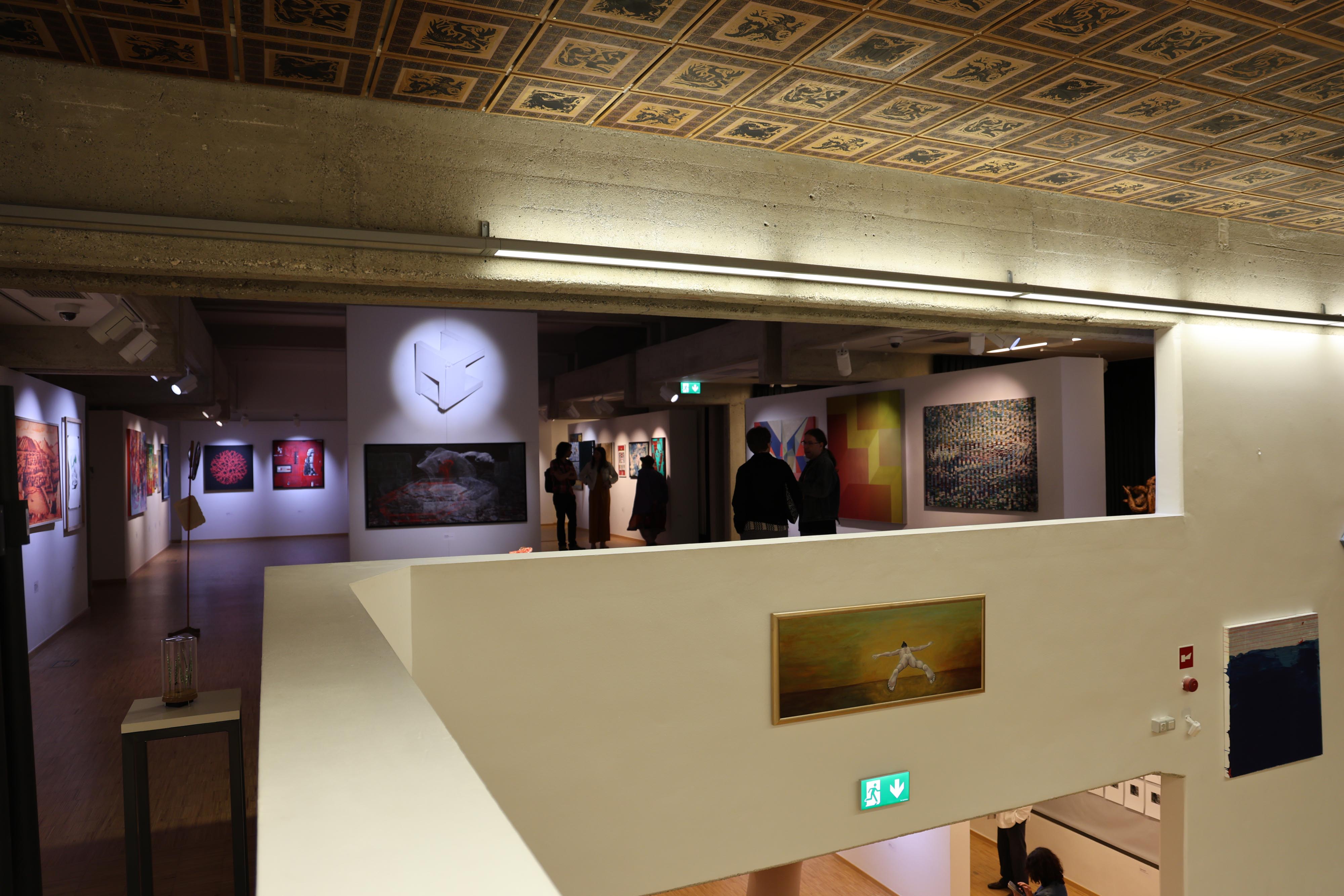
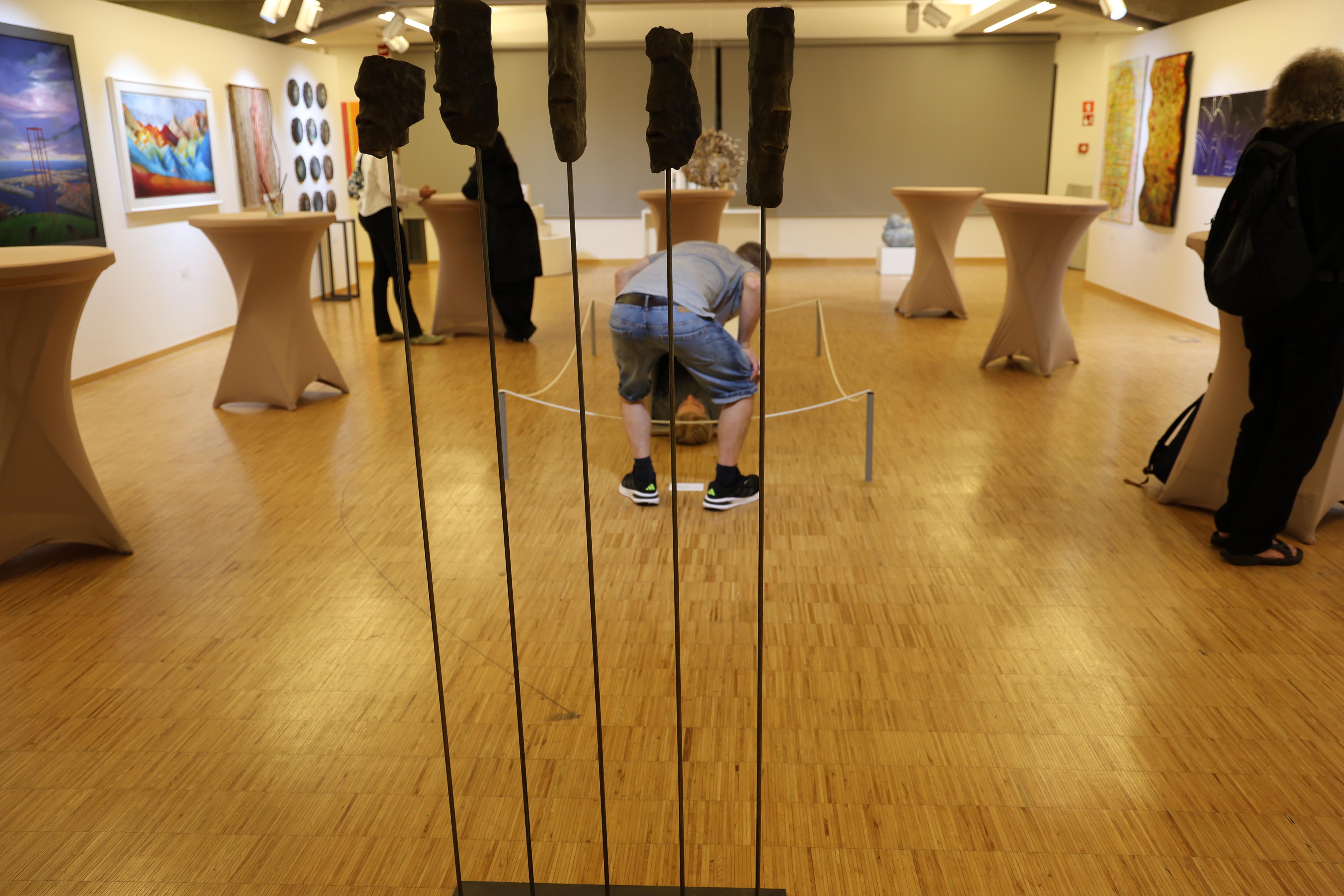
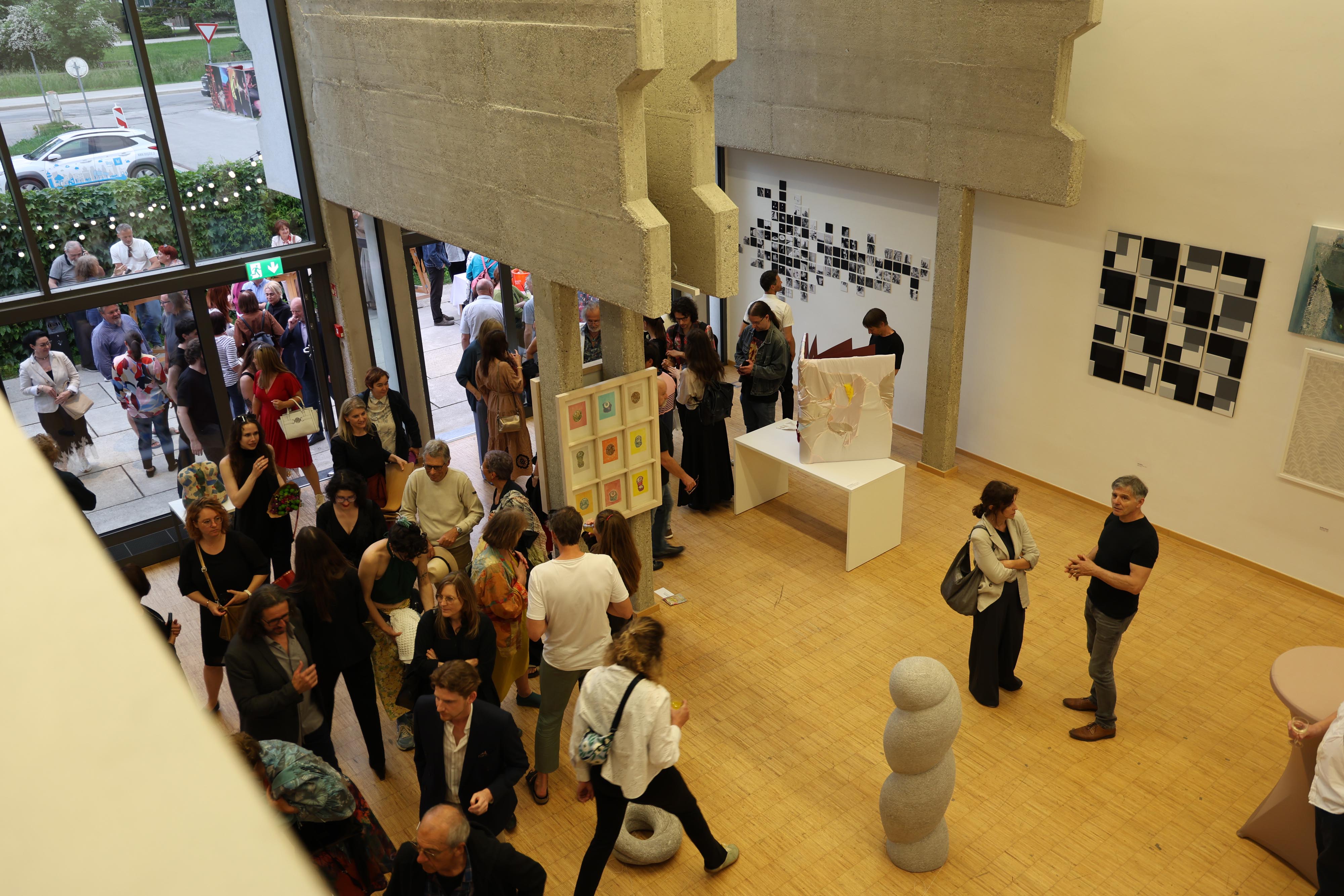
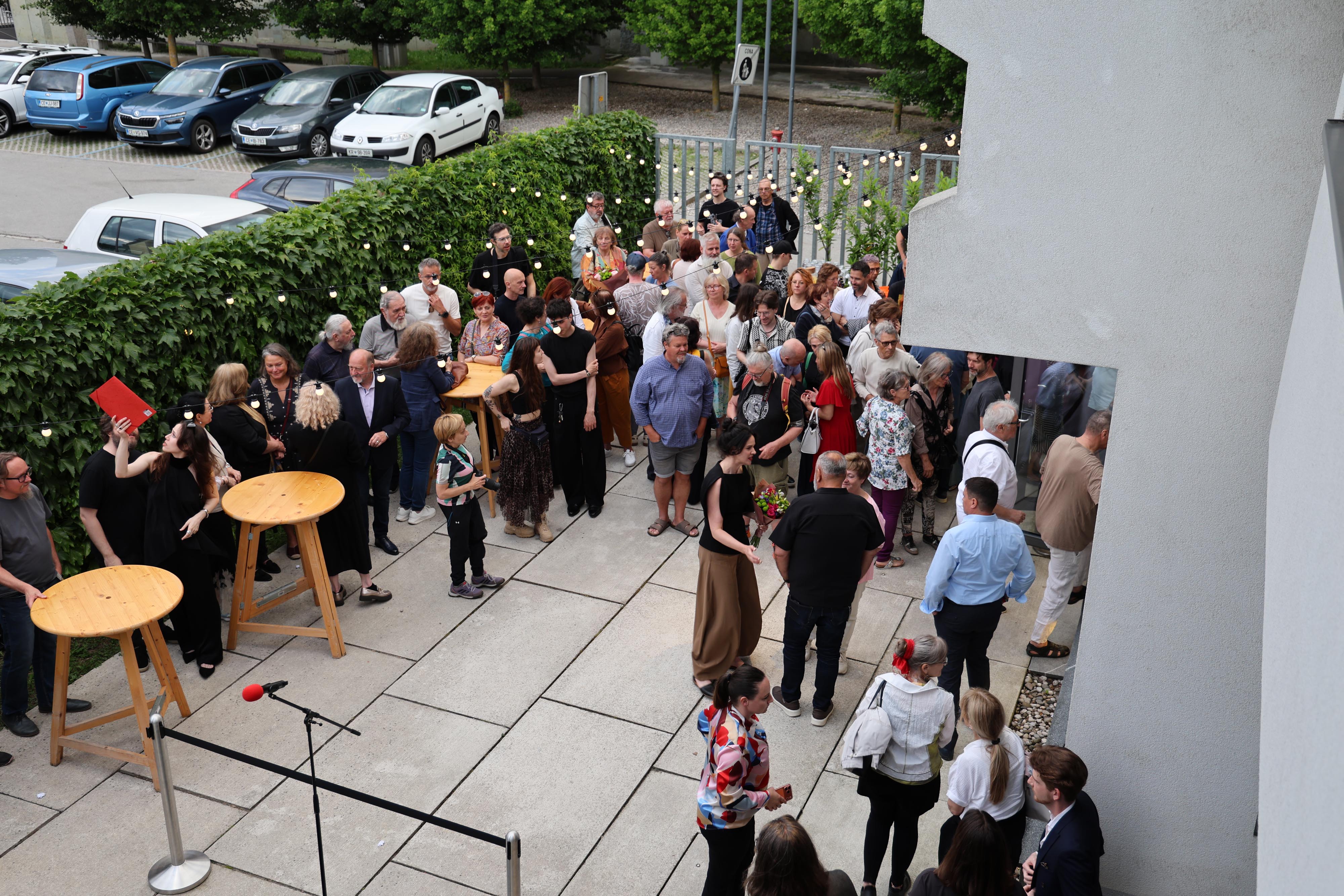
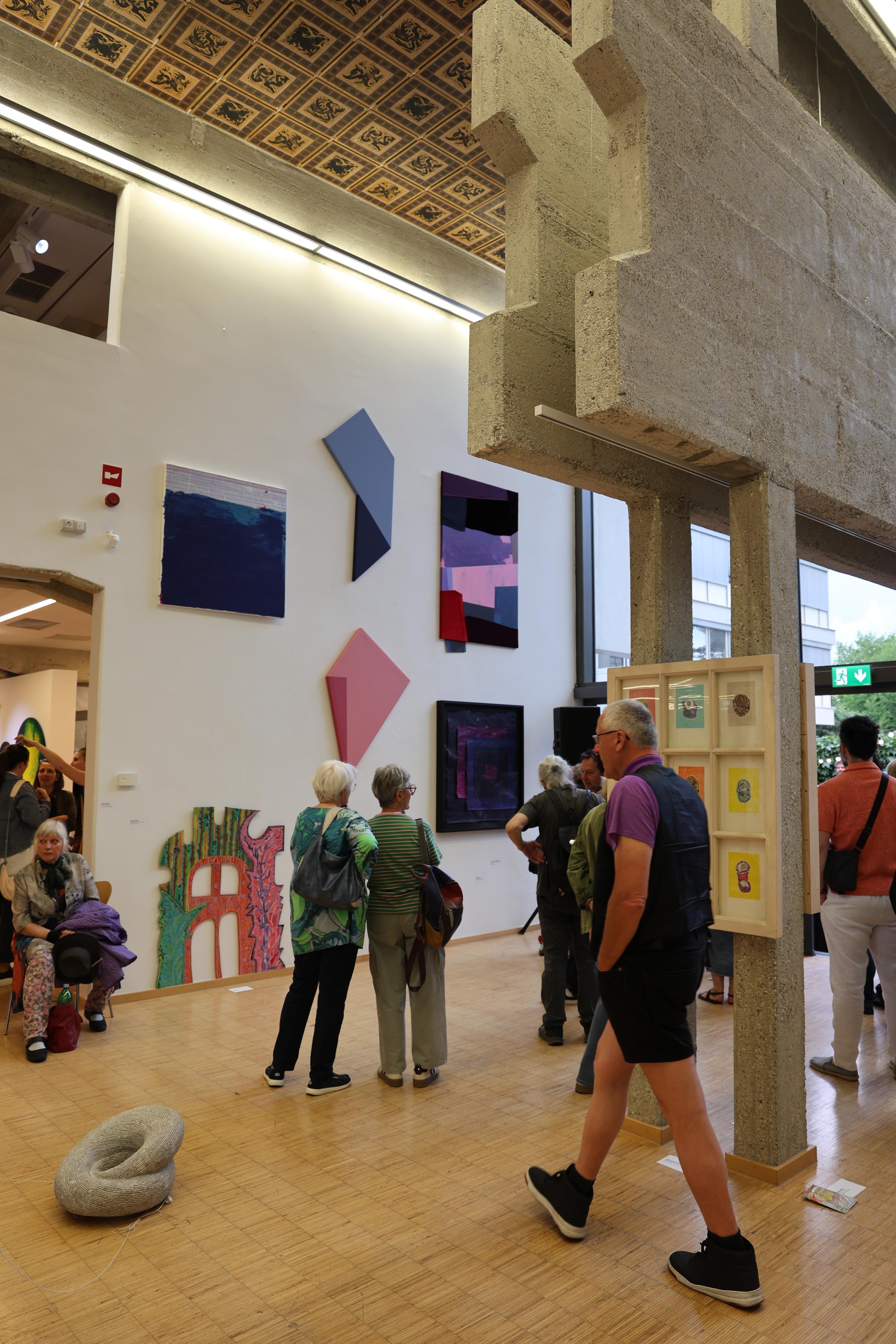
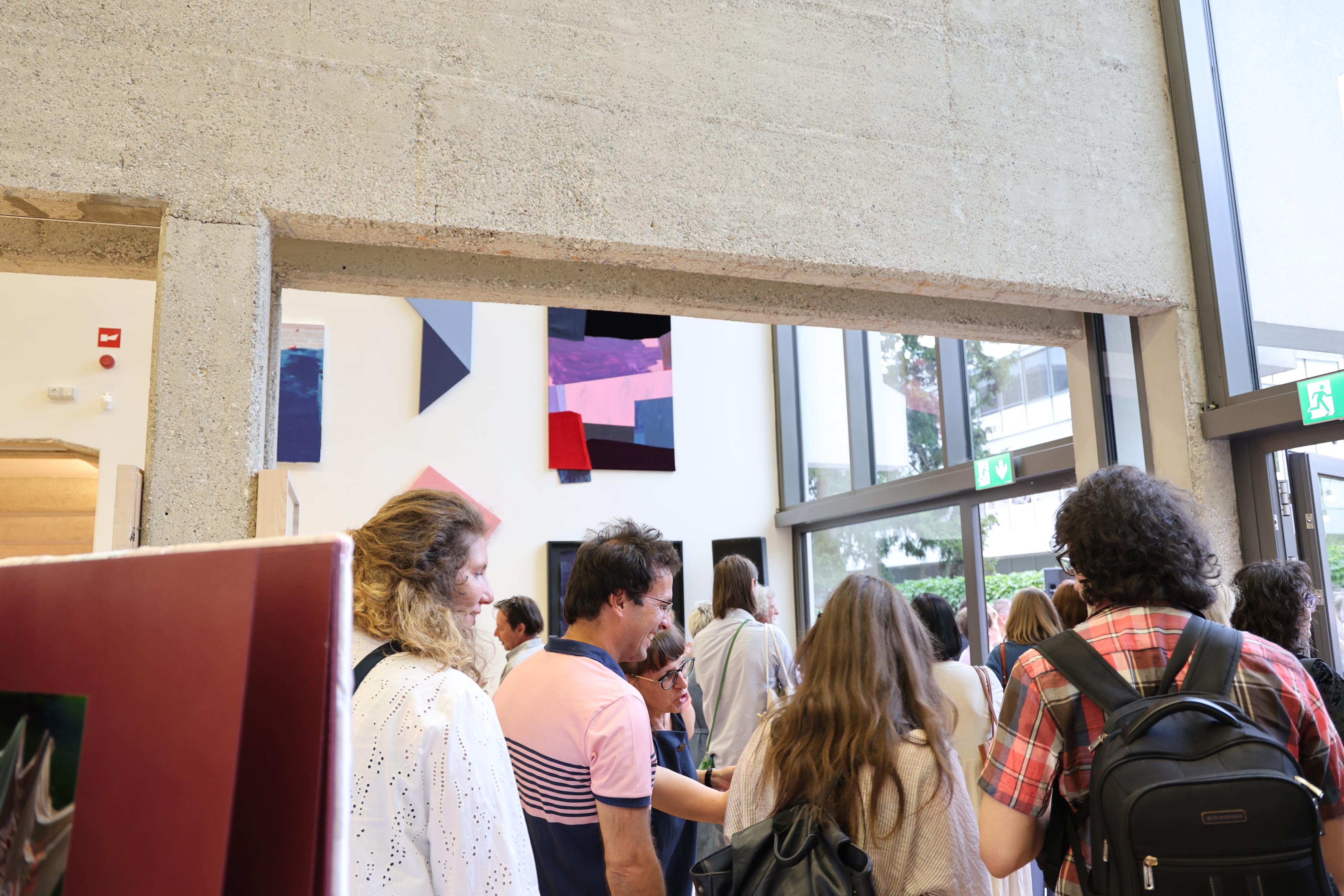
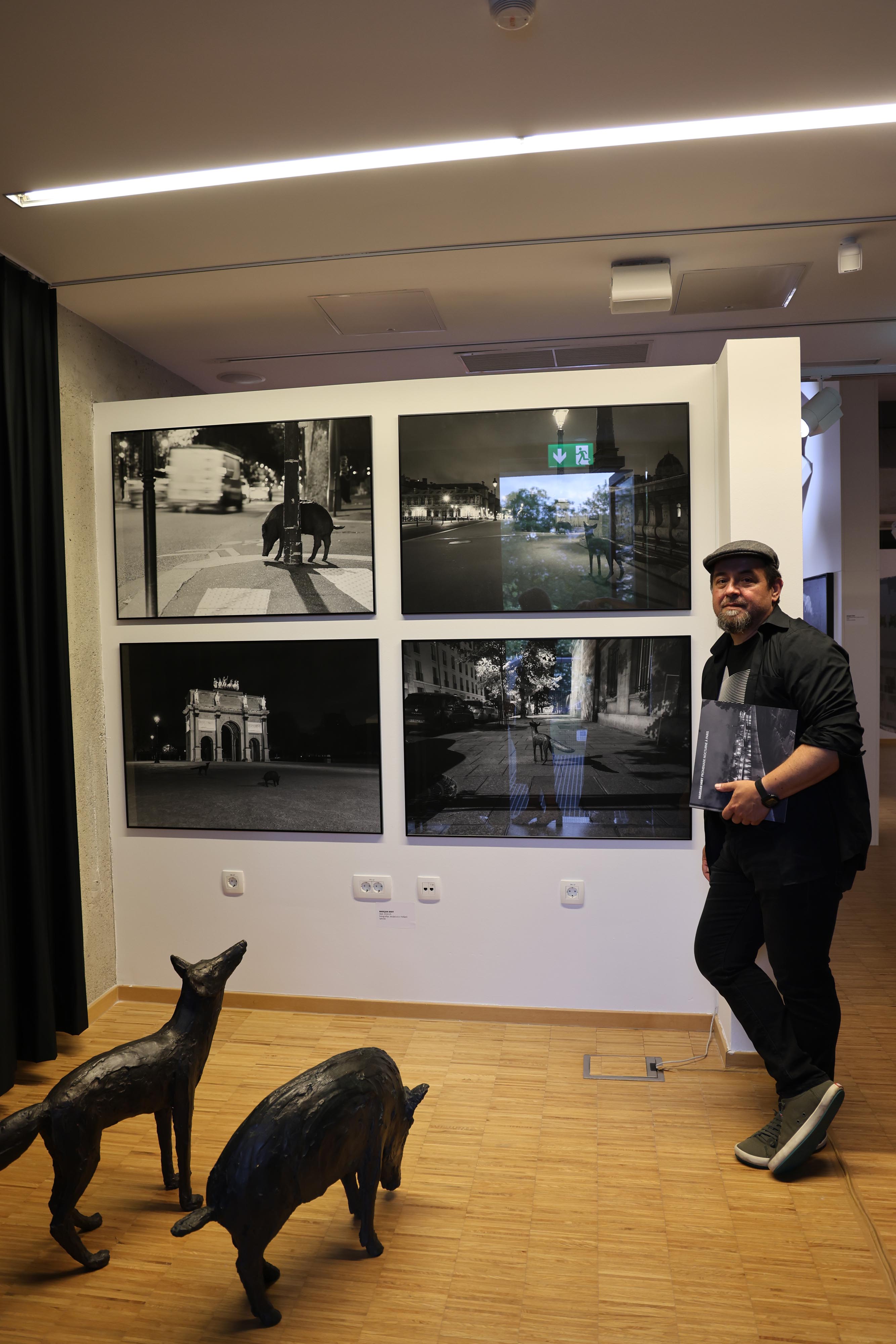
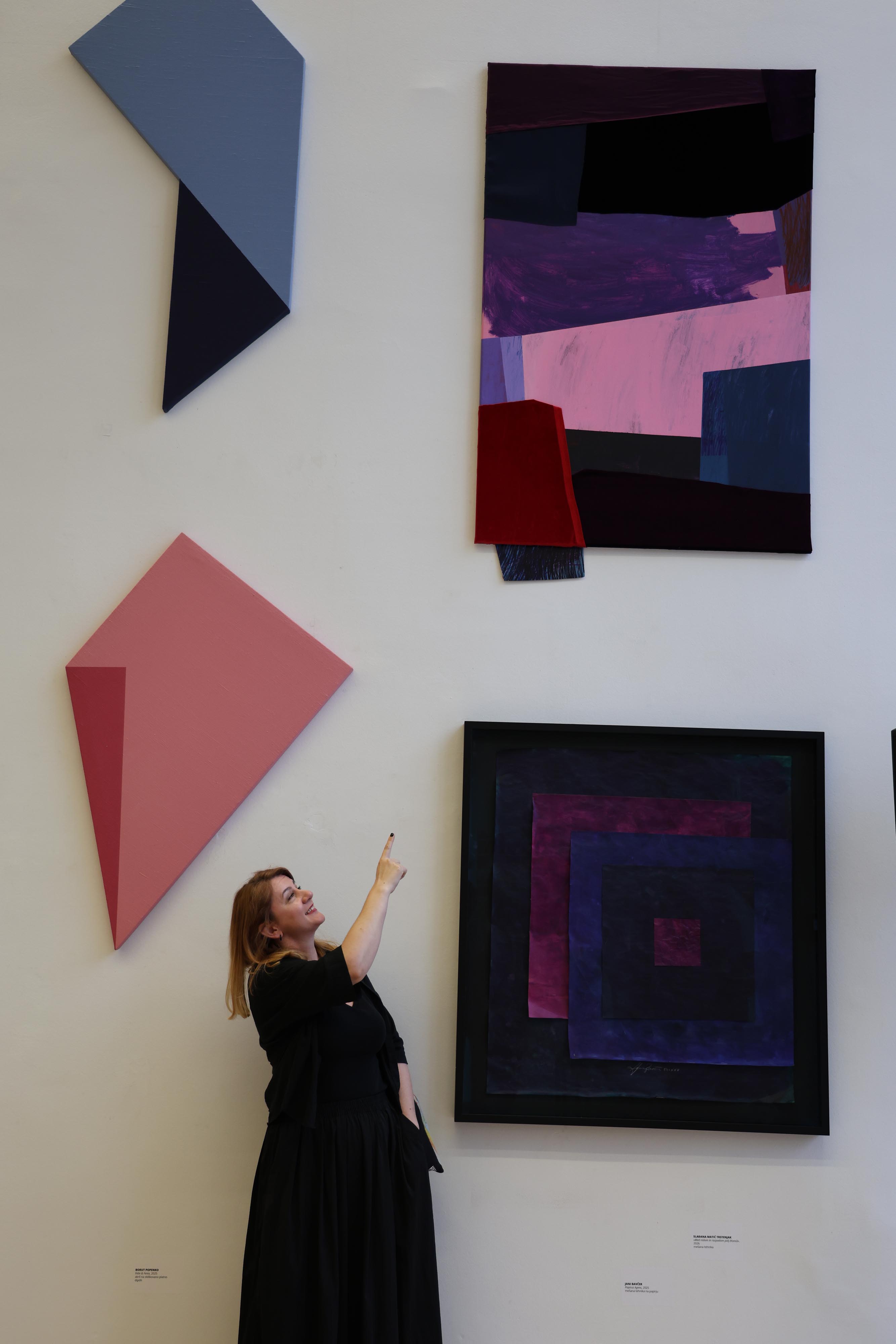
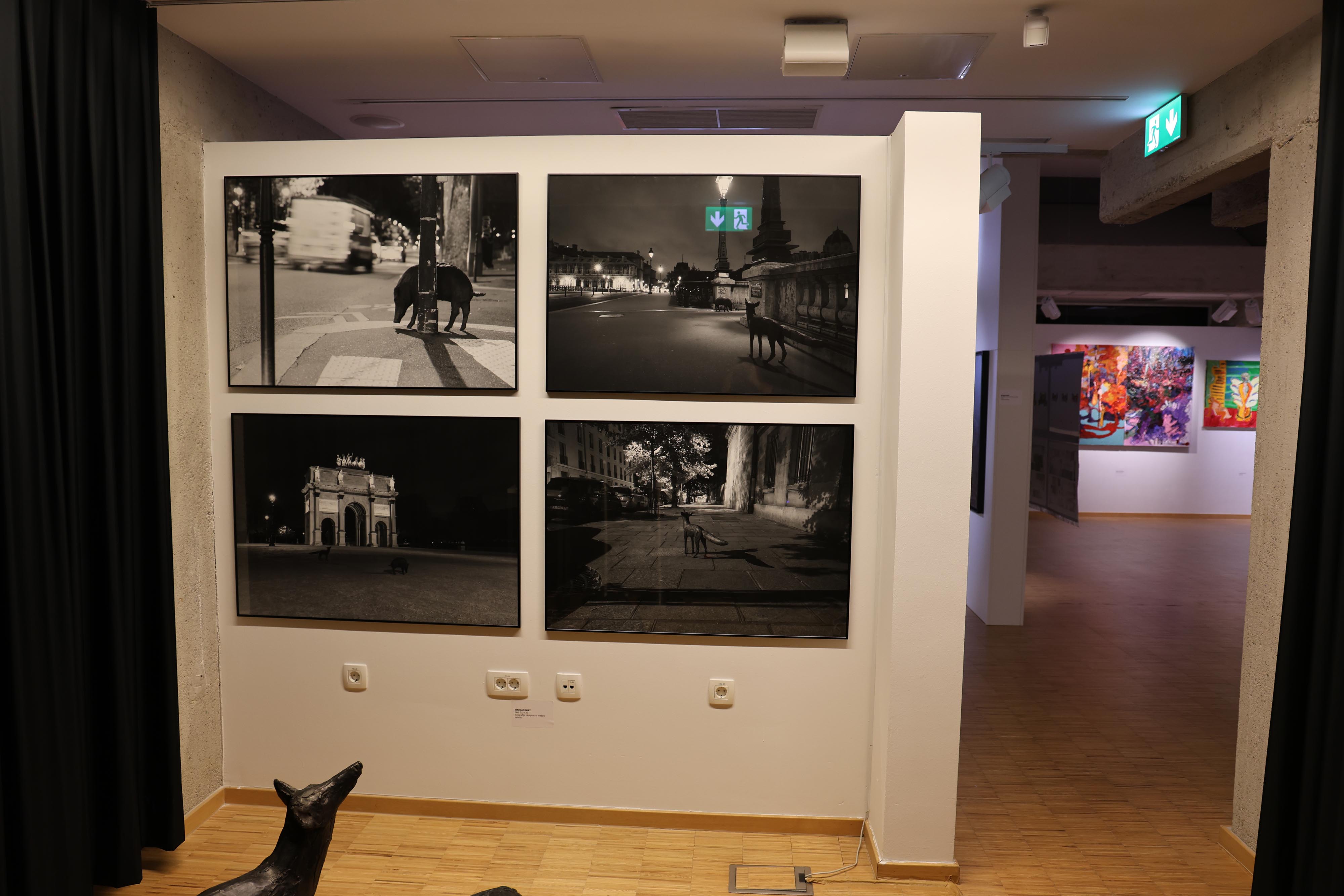
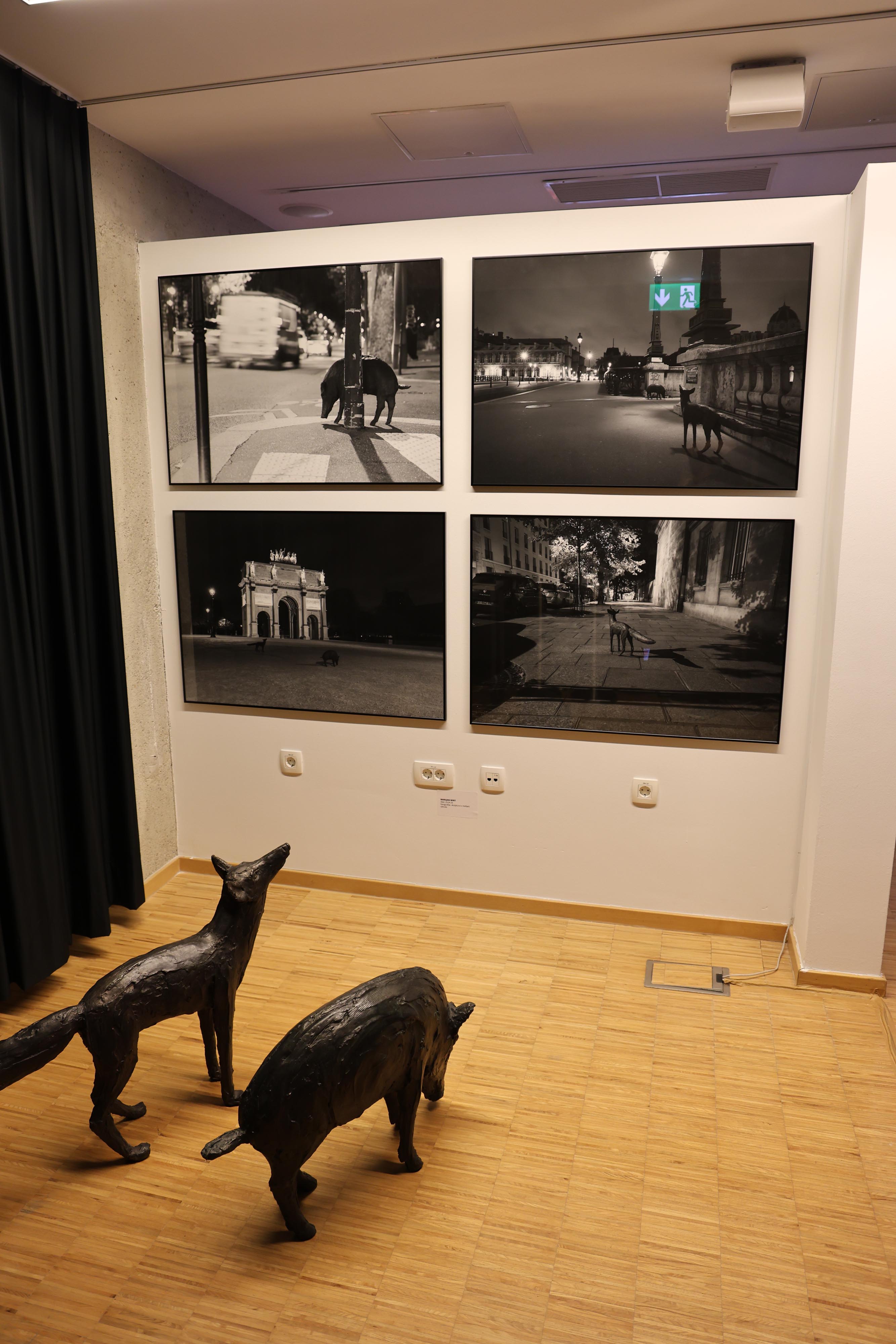
The May Salon, one of Slovenia's leading and largest contemporary art exhibitions, has been presenting the latest artistic production of members of the Association of Slovenian Fine Artists Societies (ZDSLU) since 1909. Each year, a large number of selected artists exhibit their works in a different Slovenian city. This year's Constructivist theme, dedicated to the Year of Srečko Kosovel, is particularly well suited to Velenje, with its rich working-class and industrial history.
The exhibition is curated by Marko Košan and Sara Nuša Golob Grabner, who developed the project in collaboration with the Association of Slovenian Fine Artists Societies (ZDSLU), Velenje Gallery, and the Slovenian Coal Mining Museum. The project is managed by Petra Kosi.
Participating artists_
Helena Angelski, Bagrat Arazyan, Ernest Artič, Vladimir Bačič, Karmen Bajec, Natasha Bakovic, Igor Banfi, Jani Bavčer, Natalia Berezina, Marin Berovič, Katja Bogataj, Rok Bogataj, Urška Boljkovac, Matjaš Diego Zadel DellaMorte (formerly Matjaž Borovničar), Suzana Brborović, Beti Bricelj, Klemen Brun, Brut Carniollus, Bernarda Conič, Dragica Čadež, Sara Čeh, Mojca Černič Pretnar, Bogdan Čobal, Rado Dagarin, Miloš Dekić, Barbara Demšar, Boge Dimovski, Domen Dimovski, Jurij Dobrila, Tetyana Donets, Tina Drčar, Marjan Drev, Vesna Drnovšek, Matjaž Duh, Andreja Džakušič, Erna Ferjanič, Mitja Ficko, Andrej Furlan, Tanja Gabrijelčič, Irena Gajser, Maša Gala, Irena Gayatri Horvat, Stanka Golob, Andreja Gregorič, Jasmina Grudnik, Marjan Gumilar, Herman Gvardjančič, Đejmi Hadrović, Cvetka Hojnik, Aleš Horvat, Goran J. Horvat, Anita Indihar Dimic, Lea Jazbec and Brane Širca, Jolanda Jeklin, Anja Jerčič Jakob, Klavdija Jeršinovec, Duša Jesih, Natalija Juhart Brglez, Anže Jurkovšek, Barbara Jurkovšek, Lojze Kalinšek, Narcis Kantardžić, Azad Karim, Silva Karim, Barbara Kastelec, Meta Kastelic, Simon Kastelic, Boštjan Kavčič, Mateja Kavčič, Ana Kavčnik Jamnik, Žiga Kelenc, Kiki Klimt, Aleksij Kobal, Špela Kobal, Brane Korez, Matic Kos, Alja Košar, Zmago Kovač, Pšenica Kovačič, Nina Koželj, Andreja Kranjec, Anka Krašna, Igor Kregar, Miran Kreš, Blažka Križan, Vladimir Leben, Gani Llalloshi, Natalia Lopatnikova, Robert Lozar, Aprilija Lužar, Simon Macuh, Katja Majer, Stanislav Makuc, Peter Marolt, Slađana Matić Trstenjak, Vanja Mervič, Jana Mihelj, Marijan Mirt, Andrej Mivšek, Rok Mohar, Meta Mramor, Majk Mulaček, Petja Novak, Samo Pajek, Marko Pak, Lana Pastirk, Metka Pepelnak, Miha Perčič, Andrej Perko, Izidor Tomaž Perko, Eva Petrič, Herman Pivk, Boštjan Plesničar, Ajda Podgorelec, Anja Podreka, Vojmir Pogačar, Borut Popenko, Luka Popič, Uroš Potočnik, Vesna Poznič, Zoran Poznič, Annmarie Prah, Gregor Pratneker, Arjan Pregl, Marija Prelog, Marjan Prevodnik, Primož Pugelj, Urška Rendla, Sandi Renko, Mira Resnik, Branimir Ritonja, Janez Rotman, Tara Rubinić, Stanko Sadjak, Jur Samec, Nataša Sedej, Aleš Sedmak, Nataša Segulin, Mojca Senegačnik, Apolonija Simon, Ivan Skubin, Jerneja Smolnikar, Claudi Sovre and Nejc Trampuž, Alenka Spacal, Teo Spiller, Zora Stančič, Damjana Stopar, Lucija Stramec, Petra Strban, Breda Sturm, Božidar Svetek, Stojan Špegel, Tanja Špenko, Dominik Štibernik, Arijel Štrukelj, Nataša Tajnik Stupar, Urša Toman, Tim Topić, Alenka Venišnik, Lona Verlich, Aleksander Vukan, Uroš Weinberger, Louise Winter, Maja Zaplotnik, Ljubica Zgonec Zorko, Mojca Zlokarnik, Matej Zorec, Klemen Zupanc, Lara Žagar, Dani Žbontar, and Ivan Žerjal.
Reflecting on her experience of curating the May Salon, Sara Nuša Golob Grabner stated:
“Despite the large number of participating artists and the broad range of interpretations of the chosen theme, the May Salon offers an opportunity for curatorial judgement and selection to establish at least a partial common thread, giving this survey exhibition a sense of coherence and unity. Working within architecturally distinctive spaces motivated many artists to create works specifically for the May Salon. We also attracted numerous young artists who are participating for the first time this year. In this way, this traditional exhibition project continues to remain fresh and innovative year after year.”
The exhibition brings together 173 visual artists, whose works address a wide range of contemporary issues, from social and environmental concerns to reflections on the modern world and its future. The selection of works is based on the quality of execution, the strength of their artistic message, and their relationship to the exhibition's central theme of Constructivism and Kosovel's thought.
A distinctive feature of this year's May Salon is its presentation across two venues with fundamentally different characteristics: Velenje Gallery and the Slovenian Coal Mining Museum. This presented a particular challenge in organising and installing the exhibition. While the gallery provides a conventional setting for contemporary art, the museum's authentic industrial heritage establishes a direct dialogue with the exhibited works, adding new layers of meaning. It also opens up fresh perspectives on pressing social issues that engage directly with the location of the project.
Petra Kosi, Director of the May Salon, wrote:
“This year's ZDSLU May Salon in Velenje represents an exceptional undertaking in terms of production, bringing together no fewer than 173 visual artists under the overarching theme ‘Integrals – Constructing the World’. I am delighted that we developed the project through excellent collaboration with Velenje Gallery and the Slovenian Coal Mining Museum.
The greatest challenge, but also the greatest achievement of this year's Salon, was installing the exhibition in two completely different architectural and conceptual environments. The spaces of Velenje Gallery offer a clean, geometric structure for the presentation of contemporary art, while the raw industrial underground environment of the museum enriches the exhibition both in its value and meaning.
With this edition of the May Salon, we not only commemorate Kosovel's anniversary but also demonstrate how contemporary art, presented in different environments, can initiate a powerful dialogue with people and places, precisely as the poet himself sought to achieve.”
The Slovenian Coal Mining Museum, a place of collective memory preserving the working lives of generations of miners, lends the exhibition particular symbolic significance. The encounter between art and industrial heritage connects different ideas of creation: once, the generation of energy for society's development; today, the creation of new perspectives, questions, and ideas through art.
Velenje Gallery, built in 1971 according to the designs of architect Adi Miklavec, is an important example of modernist and Brutalist architecture in Slovenia. Its clearly defined geometric structure, prominent concrete elements, and distinctive architectural language reflect the principles of functionality, pure forms, and honesty of materials.
In 2015, the building was renovated according to plans by architect Gregor Gojević, preserving its original identity and the Brutalist character of exposed concrete. This emphasis on clean lines, construction, and the relationship between space and form establishes a connection with the creative work of Srečko Kosovel and Constructivism.
Like Constructivist art, the architecture of Velenje Gallery is based on clear structure, functionality, and contemporary expression, where form itself becomes a carrier of ideas and meaning.
The architectural plan of the Velenje mining power station, built in 1926, the year of Srečko Kosovel's death, forms the central visual element of the exhibition's graphic identity and appears on the cover of the May Salon 2026 catalogue. This is far more than a coincidental choice.
It is a powerful visual symbol through which the participating artists establish a creative dialogue with the poet and thinker. At the same time, it symbolically reflects Kosovel's understanding of his own artistic mission: his ambition to bring poetry closer to working people and to carry it into the mining communities.